Artificial Intelligence
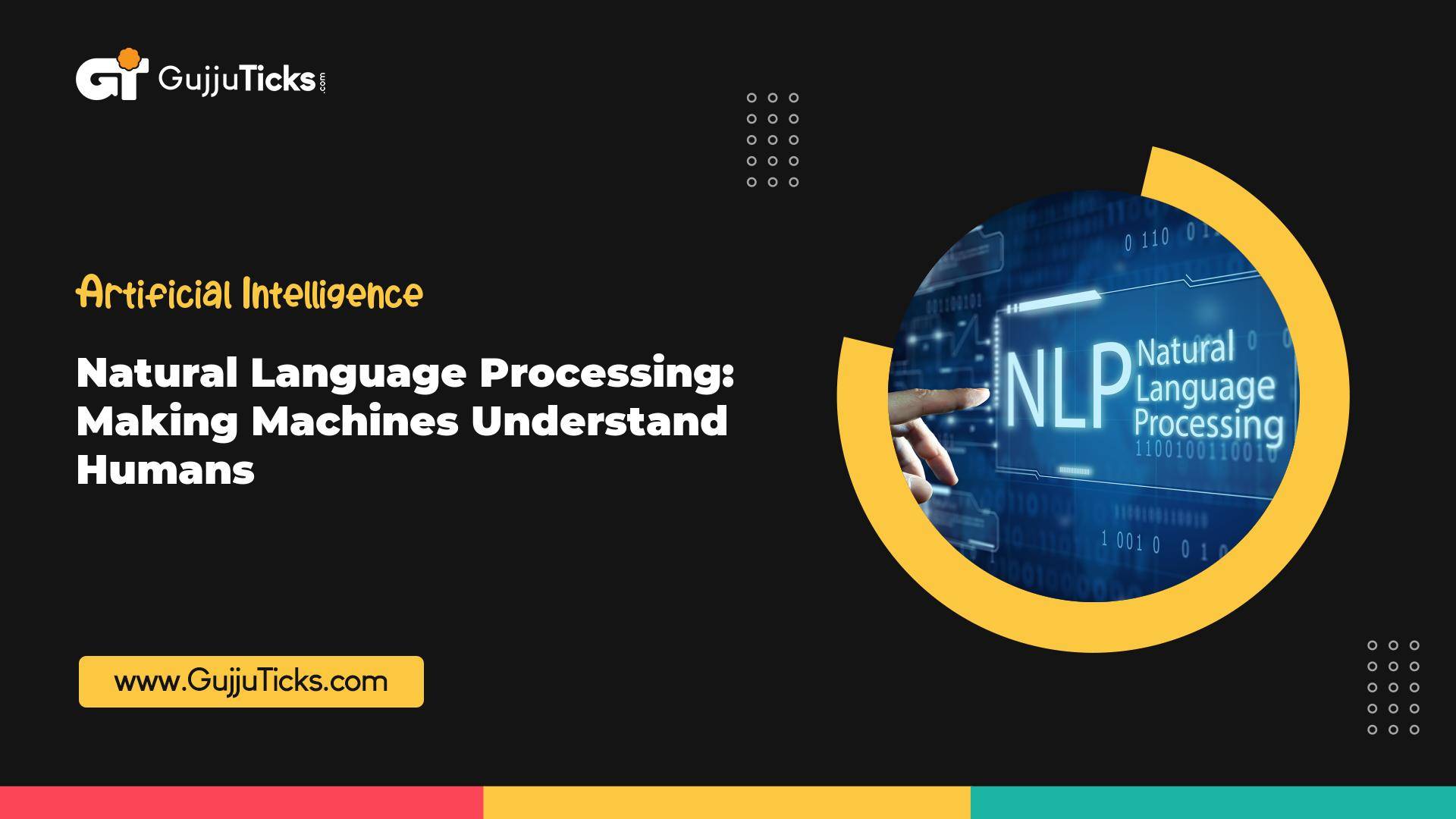
Natural Language Processing (NLP): Making Machines Understand Humans
Learn how Natural Language Processing (NLP) helps machines understand human languages. Discover its importance, applications in India, benefits for businesses, and future opportunities in AI.
Introduction
In today’s world, we talk to machines almost every day. We ask questions to Google Assistant, order food through chatbots, or use translation apps to understand different languages. But have you ever thought about how machines actually understand what we say?
The answer is Natural Language Processing (NLP). It is a special branch of Artificial Intelligence (AI) that teaches computers how to read, listen, and respond like humans. For a country like India, where people speak many languages like Gujarati, Hindi, Tamil, and English, NLP plays a very big role in making technology useful and easy for everyone.
What is Natural Language Processing (NLP)?
NLP means making computers understand human language. Normally, computers understand only numbers and codes. Humans, on the other hand, speak in words, sentences, and emotions. NLP works as a bridge between these two.
For example:
- When you say, “Play Bollywood songs,” to Alexa, NLP helps Alexa understand your sentence and find songs for you.
- When you type, “Restaurants near me,” in Google, NLP processes the words and shows the best results.
So, simply put, NLP helps machines talk and understand like humans.
How Does NLP Work?
NLP follows a few steps to understand human language:
- Speech to Text – Converts spoken words into written text. Example: Voice typing in WhatsApp.
- Breaking Sentences – Splits big sentences into smaller words and phrases.
- Grammar Check – Identifies verbs, nouns, and adjectives.
- Entity Recognition – Finds important details like names, dates, or amounts.
- Sentiment Analysis – Finds out if your message is happy, angry, or sad. Example: Reviews on Amazon.
- Response Creation – Gives the right reply or action, like booking a ticket through a chatbot.
Why is NLP Important?
NLP is important because it makes technology easy to use for normal people. Some examples we see every day:
- Voice Assistants – Google Assistant, Alexa, and Siri follow your commands in Hindi, Gujarati, or English.
- Search Engines – When you search on Google, NLP finds the best results.
- Chatbots – Banks, hospitals, and online shopping websites use chatbots to answer customer questions instantly.
- Translation Apps – Google Translate converts Gujarati sentences into English and many other languages.
- Healthcare – Doctors use NLP tools to read reports, check symptoms, and even talk to patients in their local language.
Applications of NLP in India
India is a land of many languages. This makes NLP even more useful here. Let’s see some major applications:
1. Government and Public Services
NLP chatbots help citizens use government websites and schemes in their own language. For example, a Gujarati farmer can ask questions in Gujarati and still get answers.
2. Education Technology (EdTech)
Learning apps like Byju’s and Unacademy use NLP to answer students’ doubts and make learning more interactive.
3. Banking and Finance
Banks like HDFC and SBI use NLP chatbots to answer customer queries, check account details, and give loan information instantly.
4. Healthcare Sector
Hospitals use NLP to manage patient records, book appointments, and even provide health tips in regional languages.
5. E-Commerce
Websites like Flipkart and Amazon use NLP to understand your searches, recommend products, and analyze customer reviews.
6. Social Media
Brands use NLP tools to monitor customer opinions on Twitter, Facebook, and Instagram. This helps companies improve their services.
Challenges of NLP in India
Even though NLP is powerful, India faces some challenges:
- Many Languages – India has 22 official languages and hundreds of dialects. Training machines for all these languages is not easy.
- Mixed Language – People often type in a mix of Hindi + English or Gujarati + English. This makes NLP tasks harder.
- Limited Data – For some regional languages, not enough digital data is available to train AI.
- Context and Culture – Machines still struggle with local slang, cultural jokes, and idioms.
Future of NLP in India
The future of NLP in India is very bright. With Digital India and the growth of AI startups, new innovations will make life easier. Some future possibilities are:
- Better Translations – AI tools will provide accurate translations in all Indian languages.
- Voice Shopping – People will buy products online just by giving voice commands in their mother tongue.
- Healthcare Tools – Doctors will use AI assistants that can talk to patients in Gujarati, Marathi, or Tamil.
- Education Support – Students will get AI tutors that can explain concepts in their local language.
- Government Chatbots – Citizens will talk to government websites in their mother tongue and get quick help.
Benefits of NLP for Businesses in India
Businesses that use NLP gain many benefits:
- Lower Costs – Chatbots reduce the need for call center staff.
- Happy Customers – Talking to users in their language builds trust.
- Market Insights – NLP tools study customer reviews to find what people like or dislike.
- Faster Decisions – Companies can analyze large amounts of data quickly with NLP.
For example, an e-commerce company can use NLP to find out which products are most popular in Gujarat or Maharashtra.
Conclusion
Natural Language Processing is changing the way we use technology. From voice assistants and translation apps to healthcare and banking services, NLP is everywhere around us. For a country like India, with so many languages and cultures, NLP is a blessing.
It not only helps businesses grow but also makes technology more inclusive. In the future, we can expect machines to understand every Indian language and dialect, making life easier for everyone.
NLP is not just about making machines smarter – it is about making technology truly human-friendly.