Artificial Intelligence
The Role of AI in Smart Cities and Urban Development in India
Discover how Artificial Intelligence (AI) is transforming smart cities in India. Learn about AI applications in traffic, energy, healthcare, water, waste management, and urban planning for sustainable development.
Introduction
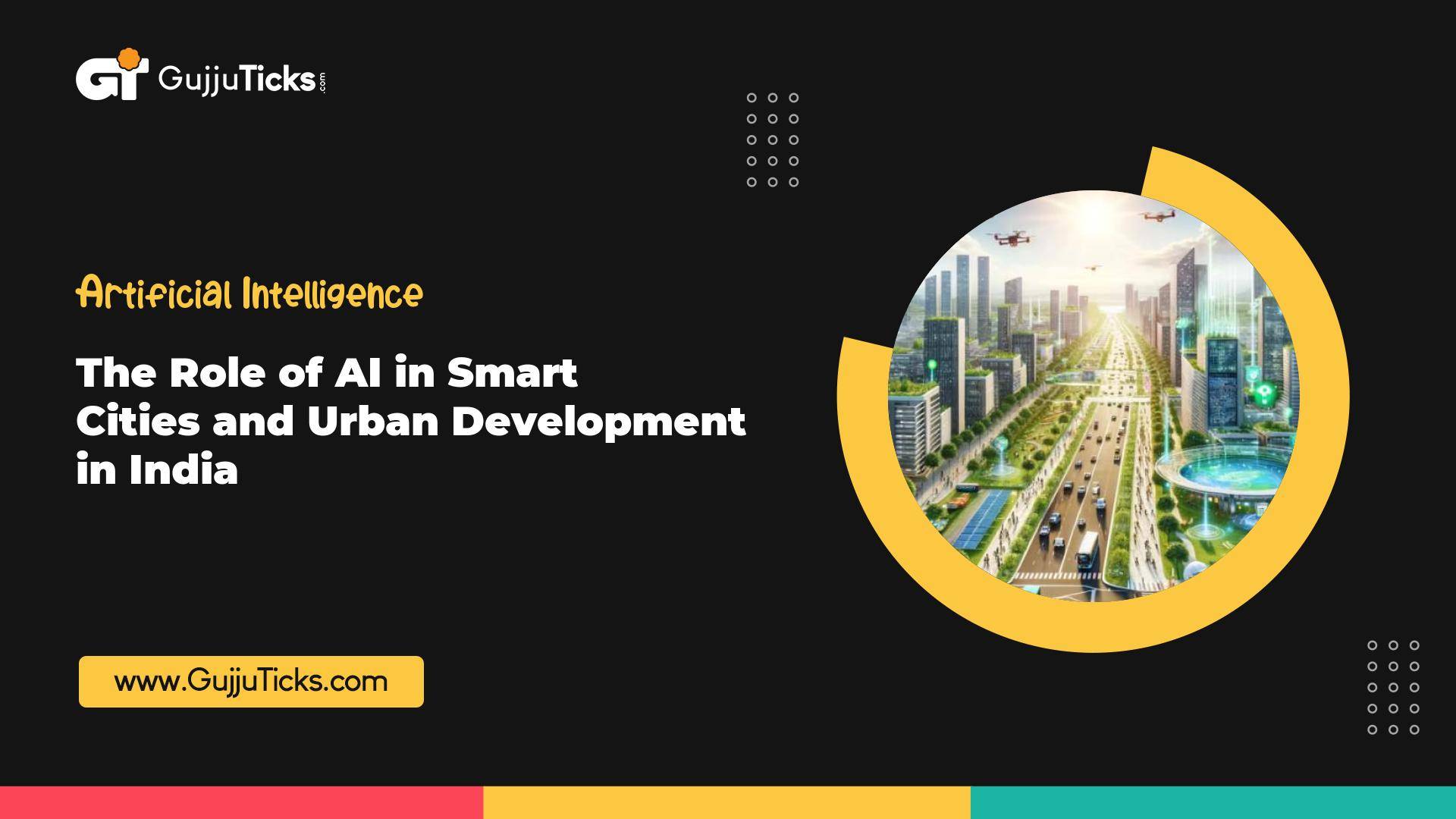
India is growing rapidly, and so are its cities. With increasing population, traffic, pollution, and demand for resources, traditional city management is no longer enough. This is where Artificial Intelligence (AI) comes in. Around the world, governments are using AI to build smart cities – cities that are efficient, sustainable, and citizen-friendly.
For India, where urbanization is happening at an unmatched speed, AI can play a big role in solving everyday problems like waste management, water supply, traffic congestion, and public safety. In this blog, we will explore how AI is shaping the future of smart cities and why it is crucial for India’s urban development.
What is a Smart City?
A smart city uses modern technology such as AI, the Internet of Things (IoT), Big Data, and cloud computing to improve the quality of life of its residents. Instead of relying only on human decisions, smart cities depend on data-driven insights to make better choices.
For example:
- AI cameras can reduce traffic jams by controlling signals in real-time.
- Smart sensors can detect water leakage before it turns into a major problem.
- Predictive models can help manage electricity demand and reduce power cuts.
India’s Smart Cities Mission, launched by the Government of India, aims to develop over 100 smart cities with the use of such technologies.
Why AI is Important in Urban Development
AI is not just about machines making decisions; it is about analyzing massive amounts of data and finding solutions faster than humans can. Urban areas generate huge data daily – from traffic movements, electricity usage, to waste collection patterns. Without AI, managing such data is almost impossible.
Key reasons AI is essential in urban planning:
- Efficiency – Better use of resources like electricity, water, and fuel.
- Sustainability – Reducing pollution and waste for a cleaner environment.
- Safety – Monitoring crime-prone areas with smart surveillance.
- Predictive Power – Solving problems before they occur.
Applications of AI in Smart Cities
1. Traffic and Transportation
Traffic jams cost India billions of rupees each year. AI can transform this sector by:
- Smart traffic signals: Adjusting signal timings based on real-time vehicle flow.
- AI-powered navigation apps: Suggesting faster and fuel-efficient routes.
- Public transport optimization: Predicting peak hours to run more buses and trains.
Example: Bengaluru has been testing AI-based traffic management systems to reduce congestion.
2. Waste Management
Urban India generates more than 62 million tonnes of solid waste annually. AI helps in:
- Smart bins with sensors to notify authorities when they are full.
- Waste sorting robots for recycling materials.
- Predictive analytics to optimize garbage truck routes.
This not only keeps cities clean but also reduces municipal costs.
3. Energy Efficiency
Electricity demand is always high in Indian cities. AI supports:
- Smart grids to balance power supply and demand.
- Predictive maintenance of transformers to prevent blackouts.
- AI-enabled smart meters for accurate billing and reduced theft.
Cities like Delhi and Mumbai are already experimenting with AI-driven power distribution to cut losses.
4. Water Management
Water scarcity is one of India’s biggest challenges. AI can help by:
- Detecting leaks in pipelines using sensor data.
- Predicting future water demand based on population growth.
- Monitoring water quality to ensure safe drinking supply.
For example, Hyderabad has started pilot projects using AI to monitor its water distribution system.
5. Healthcare and Emergency Services
AI makes healthcare more accessible in smart cities by:
- Predicting disease outbreaks using data trends.
- AI-driven chatbots for first-level medical advice.
- Faster ambulance routing through AI traffic systems.
During the COVID-19 pandemic, many Indian states used AI for contact tracing and monitoring.
6. Public Safety and Surveillance
Safety is a key concern in urban areas. AI supports law enforcement by:
- Facial recognition cameras to track criminals.
- Predictive policing to identify high-risk areas.
- Disaster management through AI models that predict floods, fires, or earthquakes.
Surat, in Gujarat, has one of the most advanced AI-powered CCTV networks in India.
7. Urban Planning and Infrastructure
Instead of building blindly, AI helps city planners with:
- 3D mapping and simulations to design better roads and buildings.
- Traffic pattern analysis to decide new flyovers or metro routes.
- Population growth prediction for future housing needs.
This ensures that urban development is planned, not chaotic.
Challenges in Implementing AI for Smart Cities
While AI offers huge benefits, India also faces challenges:
- High Cost – Advanced AI systems require investment.
- Data Privacy – Citizens may worry about how their data is used.
- Skill Gap – Need for trained professionals in AI and urban planning.
- Infrastructure Issues – Many Indian cities still lack basic infrastructure for AI adoption.
The Future of AI in Indian Smart Cities
Despite challenges, the future looks promising. As 5G networks expand and digital adoption increases, AI will become more affordable and widespread. Cities like Pune, Ahmedabad, and Kochi are already making progress with AI-based projects.
In the coming years, AI could help India achieve:
- Cleaner, greener cities with better waste and pollution control.
- Seamless public transport with reduced traffic jams.
- Safer streets with predictive policing.
- Efficient governance where citizens get services faster.
Conclusion
The role of AI in smart cities is not just about technology – it is about making life better for people. From traffic management to healthcare, AI has the power to transform India’s urban future. For a country like India, where millions are moving to cities every year, AI-driven smart urban development is not just an option – it is a necessity.
By investing in AI solutions, training skilled professionals, and ensuring data security, India can build world-class smart cities that are sustainable, efficient, and citizen-friendly.
The journey has already started, and the next decade will decide how successfully India embraces AI for its urban growth.