
Artificial Intelligence
AI in Agriculture: Smart Farming for Food Security in India
Learn how AI in agriculture is transforming Indian farming. Discover smart farming methods, precision agriculture, and sustainable solutions for food security.
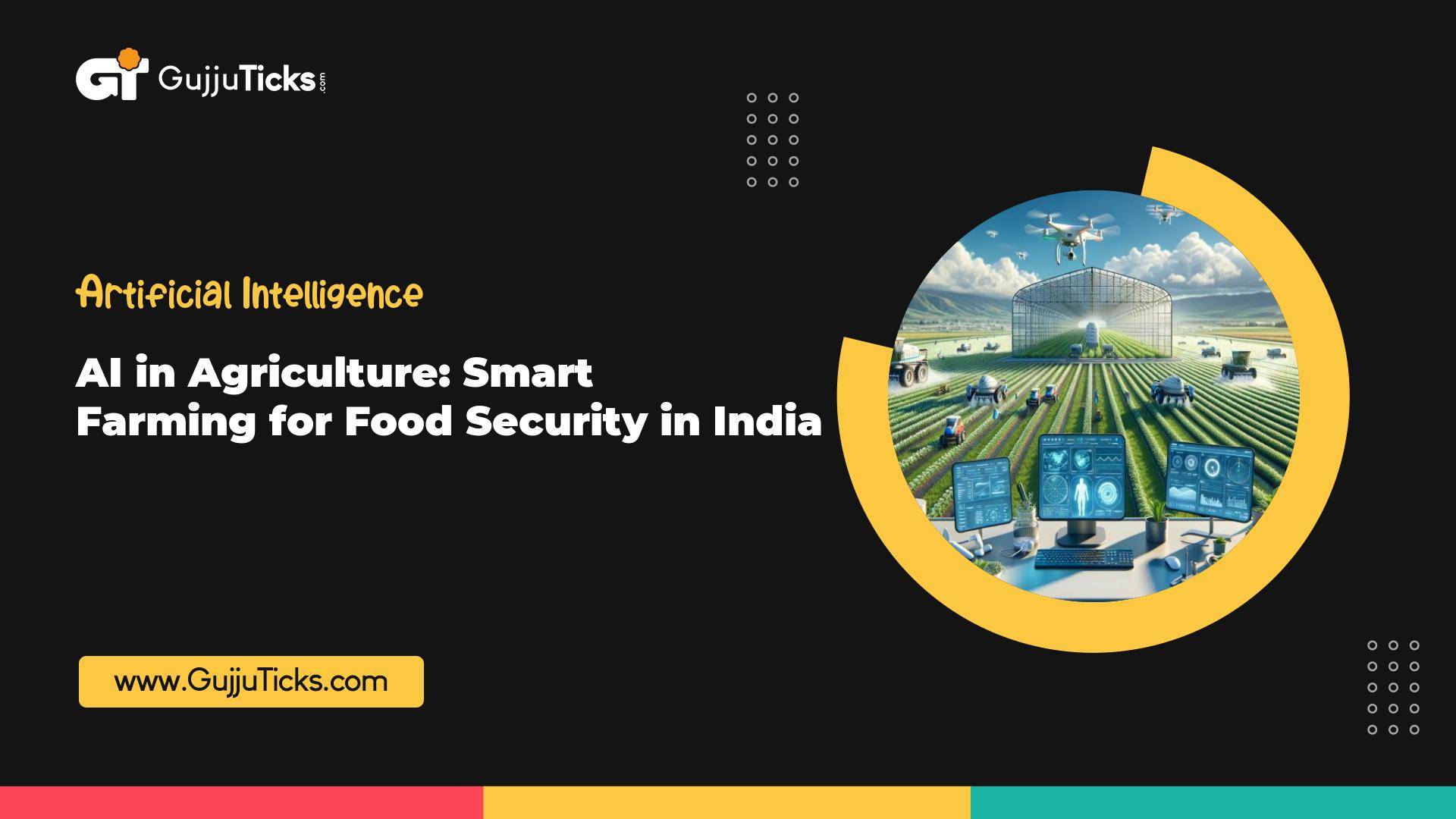
Introduction
Agriculture is the heart of India. More than half of India’s people depend on farming for their income and food. But farmers face many problems today – changing weather, low soil fertility, high cost of seeds and fertilizers, and increasing demand for food.
With India’s population growing fast, food security has become very important. We need to produce more food, but in a smart and sustainable way.
This is where Artificial Intelligence (AI) is helping. By using AI tools like sensors, drones, data analysis, and mobile apps, farming in India is becoming more modern and efficient. Farmers can now get better yields, save money, and protect the environment.
In this blog, let’s understand how AI in agriculture is changing farming in India, its benefits, challenges, and the future of smart farming.
Why India Needs AI in Agriculture
Indian agriculture is facing big challenges:
- Unpredictable Weather – Monsoons are irregular, floods and droughts are common.
- Small Farms – Most Indian farmers own very small land, which makes modern farming difficult.
- Soil Problems – Overuse of chemical fertilizers has made soil less fertile.
- Water Shortage – Agriculture uses 80% of India’s water, so efficient use is critical.
- Growing Population – By 2050, India must produce almost 50% more food than today.
To solve these issues, farming has to become smart farming – where every seed, every drop of water, and every input is used wisely. AI is the best way to achieve this.
How AI is Used in Smart Farming
1. Precision Farming
AI uses sensors, satellite images, and drones to check the health of soil and crops. Farmers get advice on:
- Which part of the field needs water
- Which crops need fertilizer
- Expected yield at the end of the season
This helps farmers save money and get better quality crops.
2. Detecting Crop Diseases and Pests
Every year, Indian farmers lose 20–30% of their crops due to pests and diseases. AI apps allow farmers to click a photo of a leaf and instantly know if it has a disease. These apps also suggest treatment methods.
This prevents big losses and increases production.
3. Smart Irrigation and Water Saving
AI-powered irrigation systems provide water only when and where it is needed. For example, sensors in the soil can tell if the crop is dry and needs water.
This can reduce water use by 30–40%, which is very important in drought-prone states like Gujarat, Rajasthan, and Maharashtra.
4. Weather Forecasting and Risk Management
AI can give accurate weather forecasts at the village level. Farmers can plan sowing, irrigation, and harvesting at the right time.
This also helps crop insurance companies create better policies, so farmers get faster claim settlements when crops fail.
5. AI Machines and Robots
Self-driving tractors, drone sprayers, and robotic harvesters are slowly entering Indian farms. These machines can spray pesticides only where needed, saving money and protecting the environment.
Although expensive, they will become cheaper in the future and more farmers will be able to use them.
6. Better Supply Chain and Market Prices
AI also helps farmers sell crops at the right time and right price. Some platforms use AI to connect farmers directly with buyers, cutting middlemen. This means farmers get more profit.
Benefits of AI in Indian Farming
- Higher Yield – Farmers can produce more food from the same land.
- Lower Costs – Wastage of seeds, water, and fertilizers is reduced.
- Better Quality Food – AI ensures healthier and safer crops.
- Food Security – More stable production means India can feed its growing population.
- Sustainable Farming – AI reduces use of harmful chemicals and saves water.
- Farmer Empowerment – Mobile apps and low-cost AI solutions make technology accessible even for small farmers.
Challenges of AI in Indian Agriculture
Even though AI is powerful, there are some problems in India:
- High Cost – AI tools like drones and robots are costly for small farmers.
- Lack of Knowledge – Many farmers are not trained to use technology.
- Poor Internet – Rural areas often have weak internet, which limits AI usage.
- Data Privacy – Farmers’ data should be protected from misuse.
- Different Farming Needs – India has many types of soil and climate, so one AI solution cannot work everywhere.
To solve this, the government, startups, and NGOs must work together. Subsidies and training can help farmers adopt AI easily.
Government and Startup Efforts in India
- Digital Agriculture Mission (2021–25) – Promotes AI, blockchain, and IoT in agriculture.
- AgriStack – A digital database of farmers to provide AI-driven advisory.
- PM Fasal Bima Yojana – Using AI for crop insurance claim processing.
- Startups like CropIn, Fasal, Gramophone, Ninjacart – Helping farmers with AI-based crop monitoring, weather prediction, and market prices.
These initiatives are bridging the gap between technology and farmers.
Future of AI in Indian Agriculture
The coming years will see even bigger changes with AI:
- AI-powered drones for real-time crop health monitoring.
- Smart greenhouses that use AI to control temperature, water, and humidity.
- AI marketplaces that connect farmers directly to consumers.
- Blockchain with AI for transparent and safe food supply chains.
By 2030, AI could add more than $15 billion every year to Indian agriculture.
Conclusion
AI is not just a tool, it is the future of farming in India. With the help of smart farming, Indian farmers can produce more food, earn more income, and protect natural resources.
If the government, startups, and farmers work together, AI will solve the biggest challenges of agriculture and ensure food security for India’s future generations.
The road may be long, but the future is bright with AI-powered farming.