Artificial Intelligence
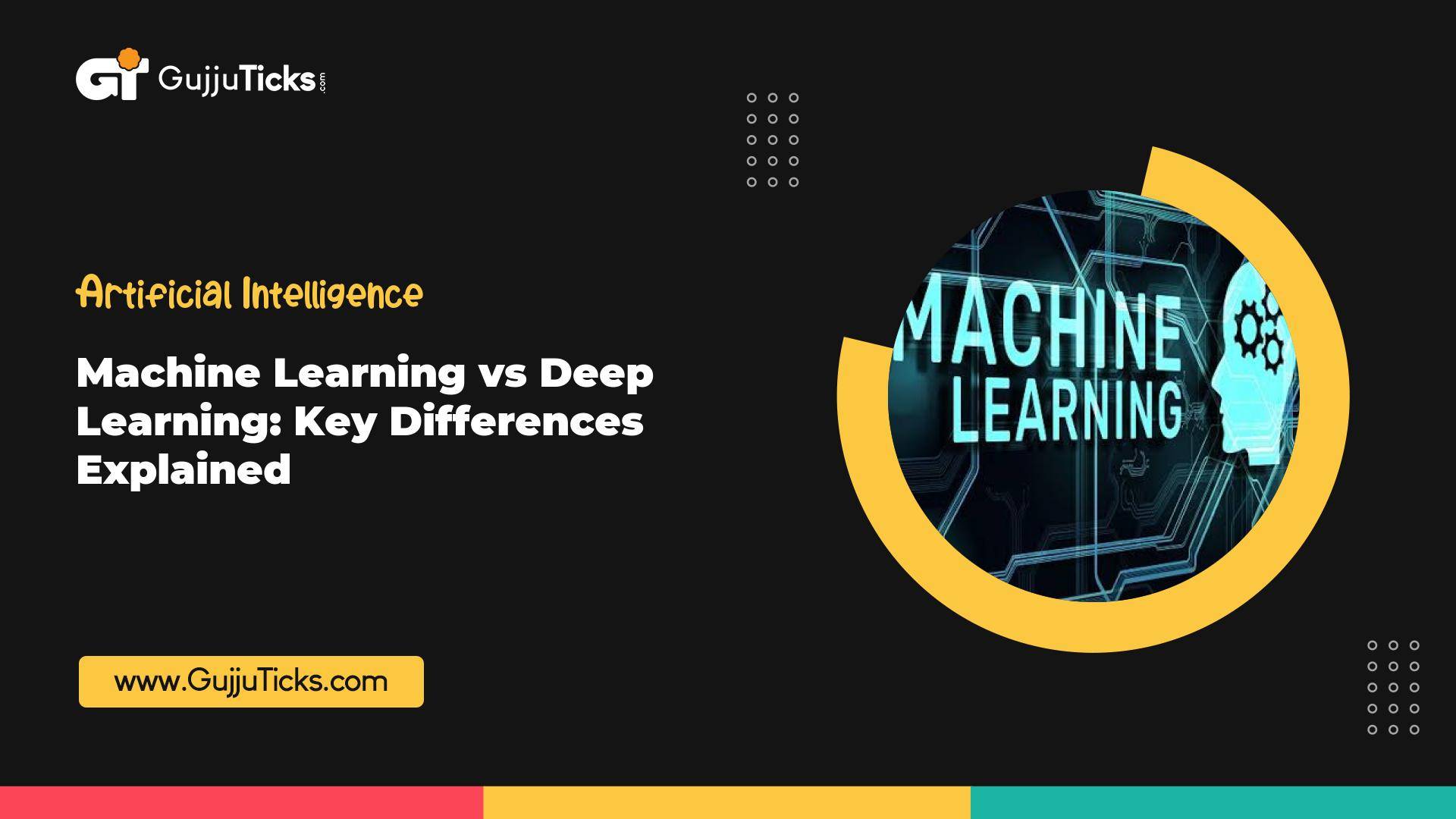
Machine Learning vs Deep Learning: Key Differences Explained
Learn the difference between Machine Learning and Deep Learning in simple words. Real Indian examples, advantages, disadvantages, and career guide included.
Introduction
Artificial Intelligence (AI) is changing our daily life in India. From using Google Pay fraud alerts, Flipkart product suggestions, to voice assistants like Alexa speaking Hindi or Gujarati, AI is everywhere.
But when people talk about AI, they often use two words — Machine Learning (ML) and Deep Learning (DL). Many students, IT professionals, and business owners get confused. Are they the same? Or are they different?
This blog will explain the key differences between Machine Learning and Deep Learning in very simple language, with real examples from India.
What is Machine Learning?
Machine Learning is a part of AI where a computer learns from data. Instead of giving step-by-step instructions, we give the computer data, and it finds patterns on its own.
Easy Examples in India:
- Banks use ML to check suspicious transactions and stop fraud.
- Flipkart and Amazon recommend products by studying your shopping history.
- Hospitals in Gujarat use ML to predict if a patient is at risk of diabetes.
How It Works:
Machine Learning uses different algorithms (rules) such as:
- Linear Regression → Predicting house rent in Ahmedabad based on area and location.
- Decision Trees → Checking whether a loan should be approved or not.
- Spam Detection → Gmail identifying junk emails.
Machine Learning works best with structured data (rows and columns, like Excel sheets) and small to medium amounts of data.
What is Deep Learning?
Deep Learning is a special type of Machine Learning. It uses neural networks — computer systems inspired by how the human brain works.
Easy Examples in India:
- Aadhaar face recognition uses Deep Learning.
- Google Translate changes Gujarati text into English with Deep Learning.
- Driverless car research in India uses Deep Learning to detect pedestrians and traffic lights.
How It Works:
Deep Learning uses multiple “layers” of neurons. Each layer learns something new from the data:
- First layer → Detects simple shapes (like edges in a photo).
- Middle layer → Detects bigger patterns (like a face).
- Final layer → Makes the final decision (this is a person’s face).
Deep Learning needs a lot of data and powerful computers (GPUs/TPUs). That’s why big tech companies like Google, Microsoft, and Infosys mostly use it.
Machine Learning vs Deep Learning: Key Differences
| Feature | Machine Learning | Deep Learning |
|---|---|---|
| Definition | A part of AI that learns from data with simple algorithms. | A part of ML that uses brain-like neural networks. |
| Data Requirement | Works with small or medium data. | Needs huge amounts of data. |
| Hardware | Works on normal computers (CPU). | Needs special hardware like GPU. |
| Speed | Learns faster but less accurate with complex data. | Takes more time but gives very high accuracy. |
| Examples in India | Loan approvals, product suggestions, stock market analysis. | Aadhaar face ID, Google Translate, medical image scanning. |
Real-World Uses in India
1. Banking & Finance
- Machine Learning: ICICI and HDFC use ML to check credit scores and predict loan defaults.
- Deep Learning: RBI is testing DL for analyzing huge payment transaction data.
2. Healthcare
- Machine Learning: Predicting dengue or malaria outbreak in Gujarat using past data.
- Deep Learning: AI scans CT images to detect lung cancer or tuberculosis.
3. Retail & E-commerce
- Machine Learning: Flipkart shows personalized Diwali offers.
- Deep Learning: Alexa allows shopping in Hindi using speech recognition.
4. Agriculture
- Machine Learning: Predicting crop yield based on weather and soil.
- Deep Learning: Farmers using mobile cameras to detect plant diseases.
Advantages and Disadvantages
Machine Learning
Advantages:
- Works with small data.
- Needs less hardware.
- Easier to understand.
Disadvantages:
- Cannot handle images, audio, or video easily.
- Needs human effort to prepare data.
Deep Learning
Advantages:
- Works very well with images, text, and audio.
- Gives very high accuracy.
- Learns features automatically.
Disadvantages:
- Needs very large data.
- Needs powerful computers.
- Works like a "black box" — difficult to explain results.
Which One Should You Learn First?
For students or professionals in India:
- Start with Machine Learning → learn basics of data, statistics, and algorithms.
- Then go for Deep Learning → learn neural networks, TensorFlow, and PyTorch.
This step-by-step approach makes learning easier and helps in job opportunities.
Future of ML and DL in India
India is moving fast in digital growth. With 5G internet, Digital India mission, and AI adoption, both ML and DL will play a big role.
- Smart cities will use AI for traffic control.
- EdTech platforms will use ML/DL for personalized student learning.
- Healthcare AI will help rural areas with online medical scans and diagnosis.
According to NASSCOM, India’s AI market may reach $7.8 billion by 2025. This means many jobs for data scientists, ML engineers, and DL specialists.
Conclusion
Machine Learning and Deep Learning are not enemies — they are partners.
- Machine Learning is good for simple, structured problems.
- Deep Learning is powerful for complex tasks like images, speech, and videos.
For Indian businesses, the choice depends on data and budget. For students, learning both is important for a career in Artificial Intelligence.
In short: Machine Learning is like riding a scooter. Deep Learning is like driving a sports car. Both will take you to your destination, but the speed and cost are different.