Digital Marketing
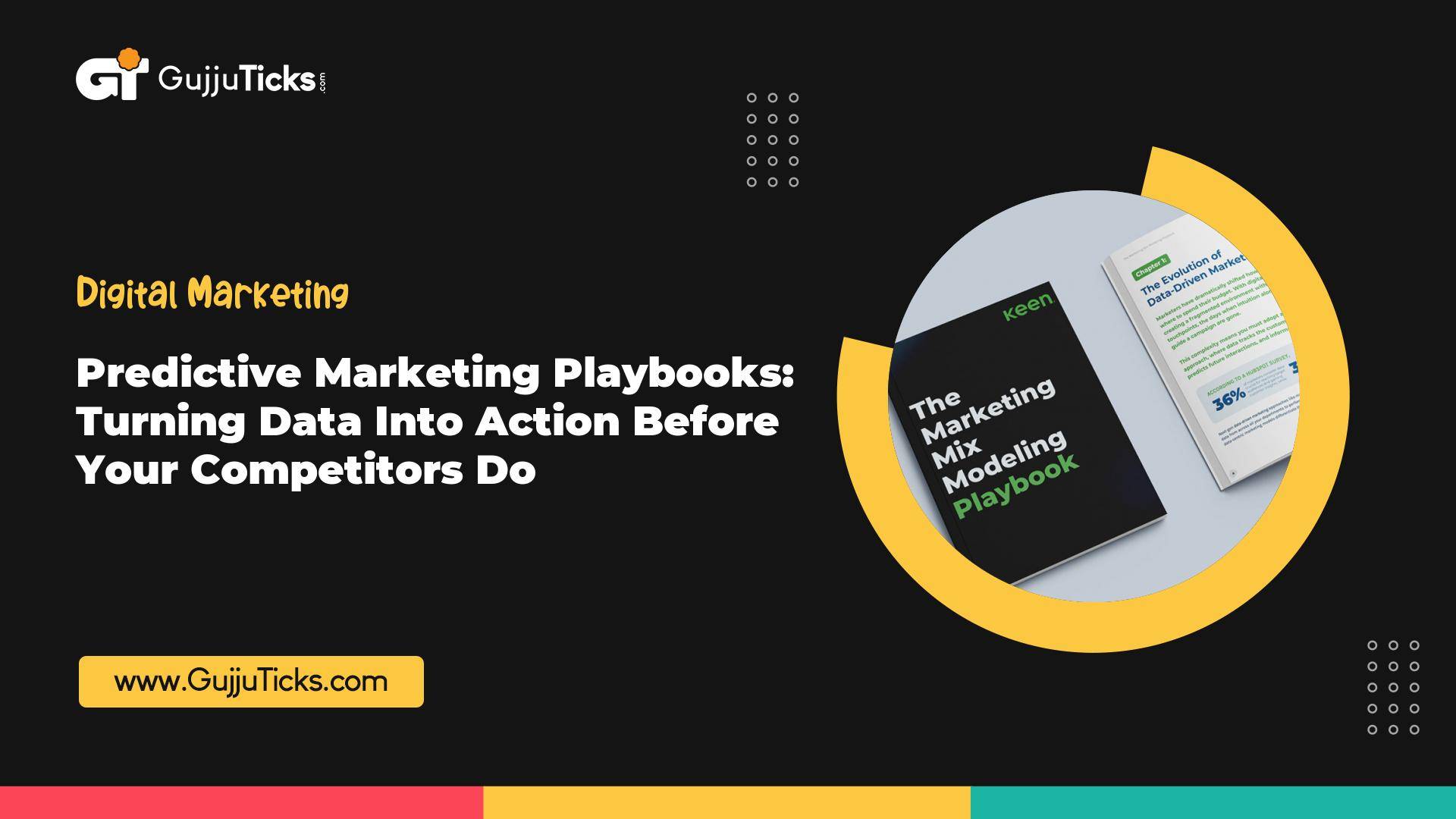
Predictive Marketing Playbooks: Turning Data Into Action Before Your Competitors Do
Discover how predictive marketing playbooks help Indian businesses turn raw data into actionable insights. Learn strategies, tools, and case studies to stay ahead of competitors in the fast-growing digital marketing landscape.
Introduction:
In today’s digital world, business moves very fast. Customers in India change their shopping habits every day. They search on Google, scroll Instagram, watch YouTube, shop on Flipkart or Amazon, and even ask questions on WhatsApp.
If you wait until the customer acts, you are already too late. That is why many smart companies are using predictive marketing playbooks. Instead of reacting, predictive marketing helps you guess what customers will do next. This way, you can prepare your campaigns before your competitors even know what’s happening.
What is Predictive Marketing?
Predictive marketing is the practice of using data analytics, machine learning, and statistical models to anticipate future customer actions.
For example:
- An e-commerce brand can predict when a customer might abandon their cart and send a personalized discount before it happens.
- A bank can identify customers likely to switch accounts and proactively offer loyalty rewards.
- A healthcare brand can forecast seasonal demand for wellness products and prepare targeted campaigns.
Unlike traditional campaigns, predictive marketing doesn’t just look at what happened in the past; it creates playbooks for the future.
Why Predictive Marketing Matters in India
India is one of the fastest-growing digital markets, with over 900 million internet users expected by 2025. Customers are browsing, comparing, and buying across multiple platforms – YouTube, Instagram, Google Search, Flipkart, Amazon, and even WhatsApp.
In such a crowded digital space, simply “following trends” is not enough. You need data-driven foresight to win:
- High CPC Keywords Advantage: Many Indian brands are already bidding on expensive keywords like insurance plans, education loans, real estate investment, and travel bookings. With predictive models, you can reduce wastage by targeting only high-value audiences.
- Customer Retention: Acquiring new customers is expensive in India. Predictive models help in increasing repeat sales, which directly boosts profit.
Competitive Edge: Small and medium businesses in India often lack big budgets. Predictive marketing lets them outsmart larger competitors with intelligent targeting instead of spending more.
Core Elements of a Predictive Marketing Playbook
A playbook is essentially a step-by-step guide for using predictive insights. Here’s how Indian businesses can build one:
1. Data Collection & Integration
- Collect customer data from CRM tools, website analytics, mobile apps, POS systems, and social media.
- Ensure clean, structured, and GDPR-compliant data.
2. Customer Segmentation
- Group customers by buying patterns, demographics, or interests.
- Example: A Gujarati jewelry brand can segment customers by “wedding season buyers,” “festival shoppers,” and “daily wear buyers.”
3. Predictive Models
- Use AI and machine learning tools to forecast actions.
- Example: “Which customer is most likely to buy again in the next 15 days?”
4. Personalized Engagement
- Create targeted campaigns across email, SMS, WhatsApp, or push notifications.
- Example: Sending “pre-Navratri offers” to shoppers predicted to buy festive clothing.
5. Automation & Execution
- Implement marketing automation platforms like HubSpot, Salesforce Marketing Cloud, or Indian tools like Web Engage and Mo Engage.
6. Measurement & Optimization
- Track results with conversion tracking, ROI measurement, and attribution models.
- Refine the playbook with every cycle.
Tools and Technologies for Predictive Marketing
Indian marketers today have access to advanced yet affordable tools. Some popular ones include:
- Google Analytics 4 (GA4): For predictive audience insights.
- HubSpot & Salesforce: For enterprise-level predictive automation.
- Mo Engage & Web Engage: Popular with Indian D2C brands.
- Tableau & Power BI: For data visualization.
- Chat GPT-powered insights: For generating campaign ideas based on predictive data.Real-World Case Studies in India
1. E-Commerce Success Story
A Surat-based fashion retailer used predictive analytics to identify that customers usually made a second purchase within 28 days of their first order. By automating reminder campaigns with targeted discounts, they increased repeat sales by 34%.
2. Banking and Finance
A private bank in India used predictive marketing to identify customers likely to take home loans in the next 6 months. Instead of advertising to everyone, they focused on high-intent users and reduced their cost-per-lead by nearly 40%.
3. Education Sector
An EdTech startup in Bengaluru used predictive playbooks to anticipate which students might drop out of online courses. Personalized support emails and WhatsApp reminders helped them reduce dropouts by 25%.
Predictive Marketing for Small Businesses in Gujarat & India
One misconception is that predictive marketing is only for large corporations. In reality, Indian SMEs can also benefit:
- A local restaurant in Rajkot can predict repeat visits from Zomato/Swiggy data.
- A coaching center in Ahmedabad can identify students most likely to join next year.
- A travel agency in Vadodara can anticipate festive booking spikes.
By starting small with affordable tools, SMEs can compete with bigger brands.
Benefits of Predictive Marketing
- Higher ROI: Spend less, earn more.
- Customer Loyalty: Retain more customers with timely engagement.
- Reduced Churn: Prevent customers from leaving by predicting dissatisfaction.
- Better Inventory Planning: Predict demand spikes for products.
- First-Mover Advantage: Act before competitors even realize the trend.
Challenges to Watch Out For
- Data Privacy: With stricter Indian data laws, marketers must handle customer information carefully.
- Skill Gaps: Not every team knows data science; training or outsourcing may be required.
- Integration Issues: Combining offline and online data can be complex.
- Initial Costs: Predictive tools require investment, though ROI justifies it long-term.
The Future of Predictive Marketing in India
By 2026, predictive marketing will no longer be optional – it will be a necessity for survival. With the rise of 5G internet, AI-powered search engines, and regional language marketing (Gujarati, Hindi, Tamil, etc.), brands will need predictive insights to stay relevant.
For Indian businesses, the question is not “Should we adopt predictive marketing?” but rather “How fast can we start building playbooks?”
Conclusion
Predictive marketing is the future of digital marketing in India. By using predictive playbooks, businesses can understand what customers will do, plan campaigns in advance, and take action before competitors even realize the trend.
Whether you are a small startup in Gujarat or a large brand in Mumbai, predictive marketing can help you save money, keep customers loyal, and grow faster.
The key is simple: don’t just follow customer behavior, predict it.
Because in digital marketing today – the brand that predicts, wins.