Cyber Safety & Online Security
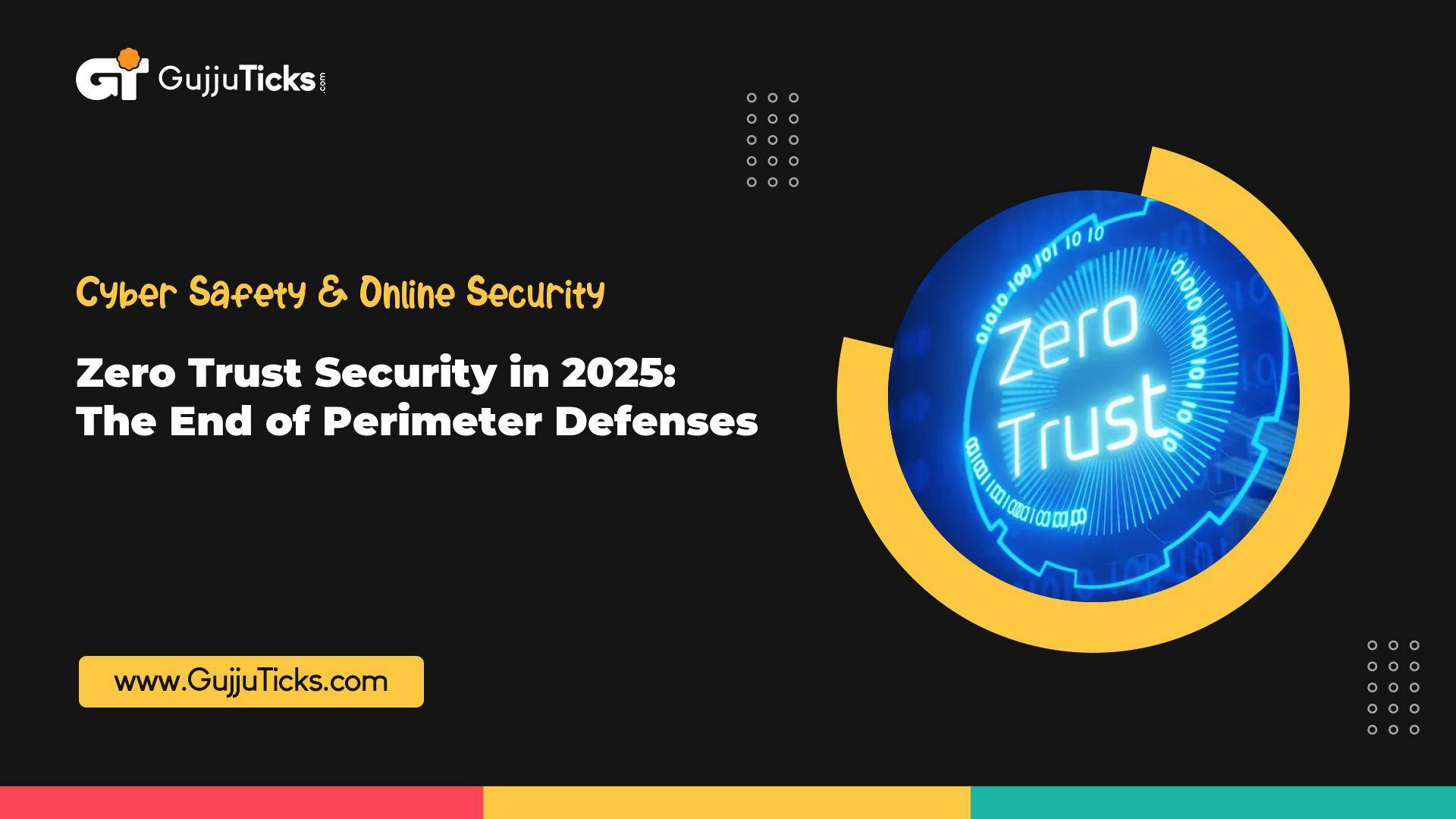
Zero Trust Security in 2025: The End of Perimeter Defenses
Learn what Zero Trust Security means and why Indian businesses are moving away from perimeter defenses in 2025. Discover benefits, challenges, and future trends in cybersecurity.
Introduction
In today’s world, businesses depend on digital systems more than ever. From online banking to e-commerce, from cloud storage to government services, almost everything runs on the internet. But with this growth comes a big risk—cyberattacks.
Earlier, companies protected their data by building a strong perimeter wall around their networks. They used firewalls, VPNs, and antivirus tools, assuming that everything inside the wall was safe. But in 2025, this old method is no longer working. Hackers have become smarter, employees work remotely, and sensitive data moves across cloud platforms every day.
To deal with this challenge, businesses are moving to a new model called Zero Trust Security. The basic rule of Zero Trust is:
“Never trust, always verify.”
This blog will explain what Zero Trust is, why perimeter defenses are failing, how Indian businesses are adopting Zero Trust, and what the future of cybersecurity looks like.
What is Zero Trust Security?
Zero Trust means no user, device, or application is automatically trusted. Even if someone is inside the company’s own network, they must prove their identity every time they try to access a system or file.
Key parts of Zero Trust:
- Identity Verification – Every user must log in securely, often using passwords, biometrics, or multi-factor authentication (like OTPs).
- Least Privilege Access – Employees only get access to the data and tools they need for their work, nothing more.
- Continuous Monitoring – Systems keep checking user activity in real time to detect suspicious behavior.
- Device Security – Only approved and secure devices can connect to the company network.
In short, Zero Trust does not rely on “inside is safe, outside is dangerous.” It assumes threats can come from anywhere, even inside.
Why Old Perimeter Security is Failing in 2025
1. Remote Work and BYOD
After the pandemic, many employees in India continue to work from home or use their own laptops and mobile phones. Traditional firewalls cannot protect such open setups.
2. Cloud Adoption
Indian companies now use multiple cloud services like AWS, Microsoft Azure, and Google Cloud. Data is spread across different platforms, making it impossible for perimeter defenses to manage security effectively.
3. Advanced Cyber Threats
Hackers now use AI-powered phishing, ransomware, and insider attacks. If they break into one weak system, they can move freely inside the network if Zero Trust is not in place.
4. Legal and Compliance Pressure
With India’s Digital Personal Data Protection (DPDP) Act 2023, businesses must protect customer data. Old security models cannot meet these strict requirements.
Benefits of Zero Trust Security
- Better Data Protection
Sensitive customer, financial, and healthcare data stays safe even if hackers manage to enter part of the network. - Strong Cloud Security
Zero Trust allows companies to manage access across multiple cloud platforms. - Stops Insider Threats
Even if an employee misuses access, Zero Trust limits what they can do. - Compliance Ready
Helps companies meet Indian and international rules like DPDP Act, GDPR, and ISO 27001. - Cost Savings in Long Term
Though setup may cost money, it prevents data breaches that could cost businesses crores of rupees.
How Businesses Are Using Zero Trust in 2025
Identity and Access Management (IAM)
Companies use IAM systems to verify who is logging in. For example, a bank employee may need biometric authentication + OTP to access customer data.
Multi-Factor Authentication (MFA)
Employees cannot log in with just one password. They must confirm identity using OTP, email link, or fingerprint.
Micro-Segmentation
The company network is divided into small parts. If hackers enter one part, they cannot move into others easily.
AI and Machine Learning
AI tools track unusual user behavior. For example, if an employee logs in from Delhi at 10 AM and then from New York at 10:15 AM, the system blocks access.
Secure Access Service Edge (SASE)
This model combines Zero Trust with secure cloud systems so employees can safely access apps and data from anywhere—whether they are in Mumbai, Ahmedabad, or a small town.
Zero Trust in Different Indian Industries
Banking & Finance
Banks and fintech companies cannot risk fraud. With millions of UPI transactions every day, Zero Trust helps protect digital payments and customer trust.
Healthcare
Hospitals and clinics store sensitive patient records. Under the Ayushman Bharat Digital Mission, Zero Trust ensures safe telemedicine and health data storage.
IT & Outsourcing
Big IT companies like Infosys, Wipro, and TCS handle global projects. They need Zero Trust to maintain global client confidence and follow compliance rules.
Government & Smart Cities
Smart cities and e-governance projects depend on secure systems. Zero Trust helps protect critical infrastructure from cyberattacks.
Challenges in Adopting Zero Trust
- High Initial Cost
Small businesses and startups may find Zero Trust solutions expensive. - Complex Setup
Shifting from old systems to Zero Trust requires time and skilled IT teams. - Employee Resistance
Employees sometimes complain about repeated logins or extra steps for authentication. - Shortage of Cybersecurity Talent
India still needs more trained experts who understand Zero Trust frameworks.
Future of Cybersecurity in India with Zero Trust
By 2025 and beyond, Zero Trust will become the standard security model. With 5G, Artificial Intelligence, and Internet of Things (IoT) devices spreading across India, perimeter defenses will not work.
Forward-looking businesses are already investing in:
- Zero Trust Network Access (ZTNA) solutions
- Identity-based security tools
- AI-powered monitoring systems
Companies that delay adoption risk cyberattacks, financial losses, and loss of customer trust.
Conclusion
In 2025, the message is clear: perimeter defenses are outdated, and Zero Trust Security is the future.
For Indian businesses, Zero Trust is not just about IT security—it is about business survival. Whether you run a fintech startup in Gujarat, a hospital in Delhi, or an IT outsourcing company in Bengaluru, Zero Trust ensures your data, systems, and customers remain safe.
The faster businesses adopt Zero Trust, the safer India’s digital future will be.