Cyber Safety & Online Security
Top 7 Online Scams Targeting Indians in 2025 – How to Stay Safe
Discover the top 7 online scams affecting Indians in 2025, including investment frauds, identity theft, and fake job offers. Learn how to protect yourself with practical tips.
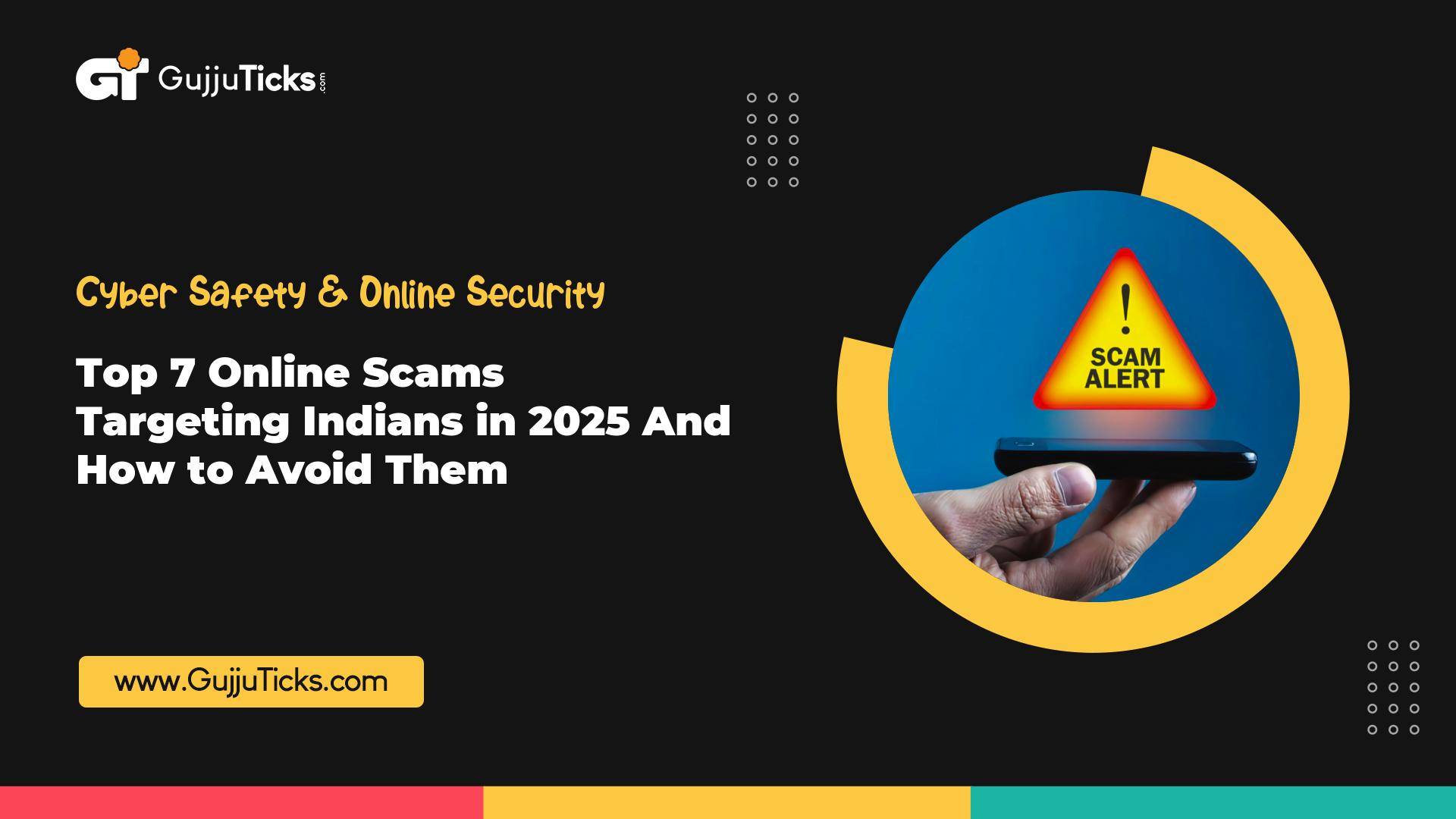
Online scams have increased in India, where cybercriminals are using sophisticated strategies to trick unwary people. It's critical to keep up with the most recent scams and self-defense techniques as digital transactions become more common.
1. Investment Scams via Social Media
Social media sites like Facebook and Instagram are being used by cybercriminals to advertise fraudulent investment opportunities, particularly in cryptocurrency and stock trading. These frauds frequently include:
• Fake ads promising high returns
• Communication through WhatsApp or Telegram
• Impersonation of SEBI-registered firms
• Fabricated portals showing false profits
Real Case: People in Lucknow lost more than ₹3.84 crore to these schemes; one victim was shown a fictitious ₹10.81 crore return before being requested to pay a large commission to withdraw their money.
Prevention Tips:
• Verify the credentials of investment platforms.
• Be skeptical of unsolicited investment offers.
• Avoid sharing personal information with unknown contacts.
2. Identity Theft and Impersonation Scams
Identity theft has grown to be a serious issue with the popularity of UPI apps and digital banking. To obtain private information, scammers pose as government agents, bank employees, or even friends.
Common Tactics:
• Urgent calls requesting OTPs or personal details
• Emails mimicking official communication
• Messages claiming account suspension or fraud alerts
Prevention Tips:
• Never share OTPs or passwords.
• Verify the identity of callers through official channels.
• Use two-factor authentication for accounts.
3. Phishing and Smishing Attacks
Phishing is the practice of tricking people into disclosing personal information through false emails or messages. Another similar SMS tactic is smishing.
Indicators of Phishing:
• Emails with urgent requests or threats
• Links directing to fake websites
• Unusual sender addresses
Prevention Tips:
• Avoid clicking on suspicious links.
• Check the authenticity of websites before entering details.
• Keep antivirus software updated.
4. Fake Job Offers and Work-from-Home Scams
Scammers have taken advantage of the appeal of remote work by posing as employers. These frauds frequently demand upfront payments for materials or training.
Red Flags:
• Unsolicited job offers with high salaries
• Requests for payment before employment
• Lack of official communication channels
Prevention Tips:
• Research companies before applying.
• Avoid paying for job opportunities.
• Use reputable job portals.
5. Online Shopping Frauds
Sellers on OLX and Quickr, as well as fake e-commerce websites, trick customers by offering fake or nonexistent goods.
Common Scenarios:
• Attractive deals with upfront payment requirements
• Fake payment confirmations
• Non-delivery of products
Prevention Tips:
• Shop from verified sellers and platforms.
• Use secure payment methods.
• Avoid deals that seem too good to be true.
6. FASTag and QR Code Frauds
Scammers use QR codes and the FASTag system to steal money from unwary users. They frequently send phony codes or links that, when scanned, result in illegal transactions.
Prevention Tips:
• Use official apps for transactions.
• Avoid scanning unknown QR codes.
• Monitor account statements regularly.
7. Deepfake and AI-Driven Scams
Artificial intelligence (AI) developments have produced deepfake voice and video recordings, which increase the convincingness of scams. These technologies are used by scammers to pose as authorities or reliable people.
Prevention Tips:
• Be cautious of unexpected video or voice messages.
• Verify requests through multiple channels.
• Stay updated on the latest scam techniques.
Conclusion
Being aware and alert is the first line of defense against increasingly complex online scams. In the digital age, people can safeguard their finances and themselves by being aware of the strategies scammers employ and taking preventative action.