Cyber Safety & Online Security
Phishing Scams Explained – Why Even Smart Gujaratis Are Falling for Them
Even educated Gujaratis are becoming victims of phishing scams. Learn how to identify, prevent, and protect yourself from online fraud in India.
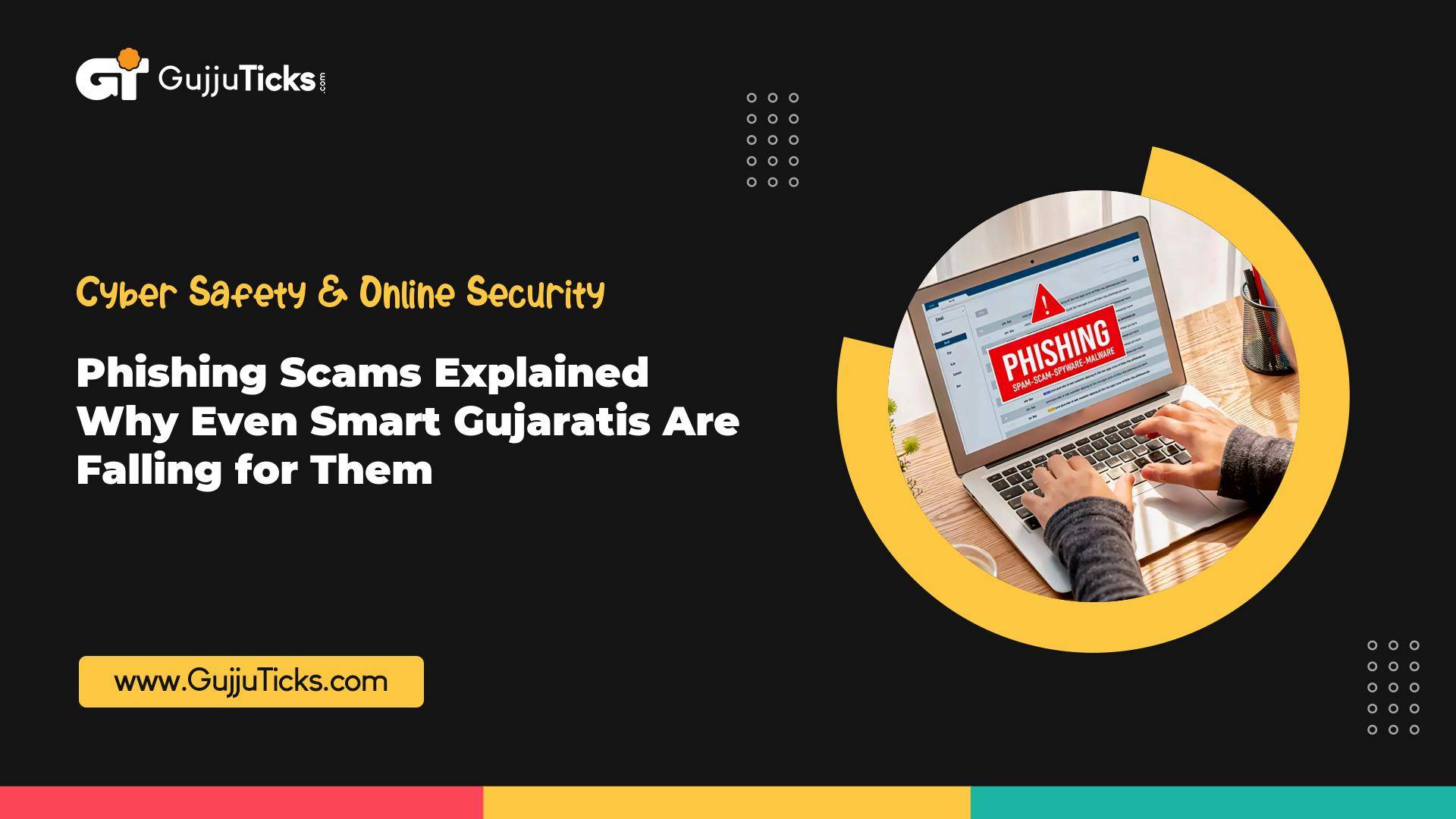
Phishing scams are becoming a significant cyber threat in India's quickly expanding digital landscape, where UPI transactions, online shopping, and digital banking have become commonplace. Surprisingly, Gujaratis who are tech-savvy and well-educated are not exempt. However, why is that?
Stories of people losing lakhs of rupees to internet scammers are becoming frighteningly common, from Ahmedabad to Surat, Rajkot to Gandhinagar. Phishing scams target everyone, not just the elderly or those with lower literacy levels. Let's examine what phishing is, why it works so well, and how you and your loved ones can avoid falling victim to it again.
What is a Phishing Scam?
Phishing is a form of online fraud in which con artists pose as reliable organisations, banks, or well-known apps in order to fool you into disclosing private information such as:
• Bank account details
• OTPs (One-Time Passwords)
• Credit/debit card numbers
• Aadhar or PAN numbers
• Login credentials
Scammers use this information to steal your identity or money after you share it, frequently without your knowledge.
Why Are Gujaratis Being Targeted?
Gujarat is renowned for its high level of digital literacy and entrepreneurial spirit. However, that's precisely why Gujaratis are such attractive targets. This is the reason:
1. Widespread Digital Usage:
Gujaratis are more vulnerable to possible threats because of the state's high mobile penetration and widespread use of digital banking and trading platforms.
2. High Transaction Volume:
Professionals and business owners frequently conduct significant transactions, which makes them appealing targets for phishing scammers.
3. Overconfidence in Tech Skills:
Many victims disregard warning signs because they believe they are too intelligent to fall for a scam.
4. Trusting Nature:
Gujaratis tend to be courteous and respectful, which occasionally makes them susceptible to phoney calls or messages.
Most Common Phishing Tactics in Gujarat
Phishing isn't always a phoney email that ends up in your spam folder. Scammers are now very inventive. Here are a few real-world techniques:
1. Fake Bank Calls or SMS
Your bank might call you and ask to "verify" your card information or provide an OTP for KYC.
Example:
"Sir, your incomplete KYC will result in the blocking of your SBI account. To update it, kindly share the OTP that we sent.
2. Fraudulent UPI Links
Payment links are sent to you by scammers via SMS or WhatsApp. It may appear to be a "Pay" button when clicked, but it is actually a "Collect Request," and you unintentionally allow money to be taken out.
3. Google Search Traps
Are you using Google to look up customer service numbers? Fraudsters display phoney helpline numbers in their advertisements. Numerous victims have called these and divulged private information.
4. Fake Job Offers or Lottery Wins
You get a WhatsApp message or email telling you that you have won a job in Dubai or the lottery. To "transfer the prize," they request your bank account information and identification documents.
Real Stories from Gujarat
Case 1 – Surat Businessman Lost Rs. 7.5 Lakhs
In a phoney Flipkart support message, a 36-year-old diamond merchant clicked on a link for a UPI refund. In the end, he approved five different transactions.
Case 2 – Ahmedabad Housewife Duped on Facebook
She received a message from a phoney friend asking for urgent money. Assuming she was assisting a legitimate contact, she sent Rs. 50,000.
These tales are no longer uncommon; rather, they occur daily.
How to Identify Phishing Attempts
Watch out for these red flags:
• Unsolicited calls asking for OTPs or passwords
• Messages with urgent threats (“Account will be blocked!”)
• Emails from unfamiliar or suspicious-looking addresses
• Spelling errors or weird language in messages
• Google Ads showing customer care numbers (verify only from official websites)
How to Protect Yourself
1. Never Share OTPs or Passwords
These will never be requested by a bank or government agency via phone or message.
2. Use Verified Apps and Websites Only
Apps should always be downloaded from the official Apple App Store or Google Play Store. Steer clear of APKs from unidentified sources.
3. Enable Multi-Factor Authentication (MFA)
Use this for payment wallets like PhonePe or Google Pay, email, and banking apps.
4. Double-Check Links Before Clicking
Particularly in emails or messages, hover over links before clicking.
5. Educate Your Family
Speak with your parents, children, and even your housekeeper. They are also frequently targeted and at risk.
What to Do If You’ve Been Scammed
1. Immediately call your bank and freeze your account.
2. Report the scam to Cyber Crime India:
• Visit: https://cybercrime.gov.in
• Call: 1930 (Cyber fraud helpline)
3. File an FIR at your nearest police station.
4. Keep screenshots, messages, and transaction records for investigation.
Final Thoughts
Phishing scams are now psychological traps as well as technical threats. If they let their guard down, even the most intelligent Gujaratis can be tricked. Awareness, scepticism, and proactive protection are crucial.
Gujarat may be leading the way in digital India, but great convenience comes with a high price. Make sure that you, your loved ones, and your company are equipped to handle the constantly changing strategies used by cybercriminals.