
Cyber Safety & Online Security
Passwordless Authentication 2025: Is This the End of Passwords Forever?
Explore how passwordless authentication is transforming cybersecurity in 2025. Learn about biometrics, passkeys, and UPI safety for Indian users.
Introduction
Imagine this: you open your phone banking app, and instead of typing a long, complicated password, the app simply scans your face and lets you in. No forgotten passwords, no "reset password" emails, and no fear of hackers guessing your login.
This is not science fiction anymore. In 2025, passwordless authentication is becoming the new standard in the digital world. For Indian users, who use UPI, net banking, shopping apps, and government services every single day, this shift could make online life both easier and safer.
But is this really the end of passwords forever? Let’s explore.
Why Passwords Don’t Work Anymore
Passwords were once considered the best way to protect your accounts. But today, they are one of the weakest points in cybersecurity.
Some problems with passwords are:
- Easy to Guess: Many people still use simple passwords like 123456 or india@2025. Hackers can easily guess these.
- Reusing the Same Password: People often use the same password for Facebook, Gmail, and bank accounts. If one account gets hacked, all accounts are at risk.
- Phishing Attacks: Fake SMS, emails, or websites trick users into entering their passwords. In India, UPI and net banking scams are common.
- Data Breaches: Every year, millions of stolen passwords are leaked online and sold on the dark web.
In short, passwords are no longer reliable. That’s why companies and governments are moving towards passwordless systems.
What is Passwordless Authentication?
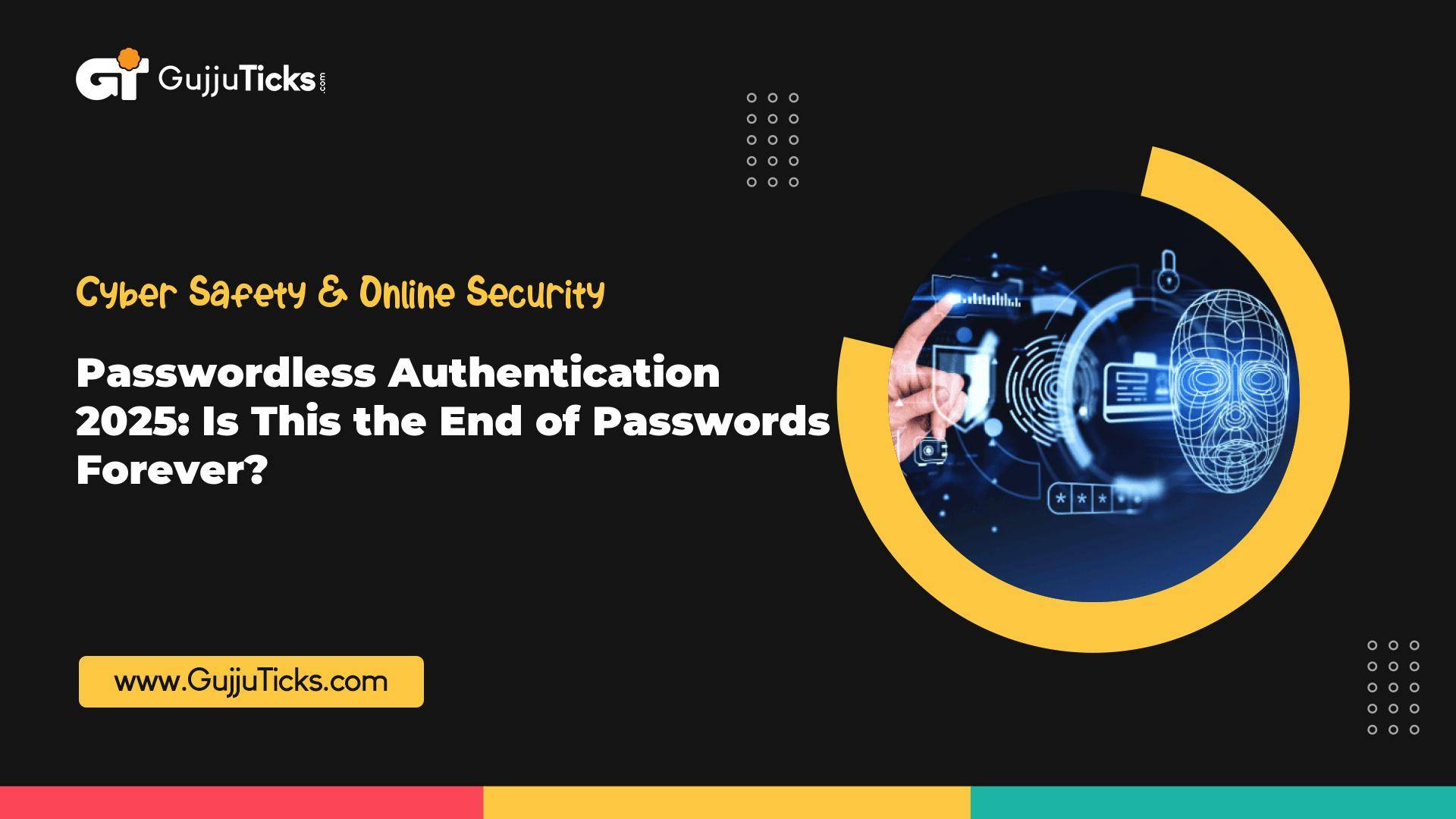
Passwordless authentication means logging in without typing a password. Instead, other secure methods confirm your identity.
Some examples include:
- Biometric Login: Using fingerprint, face, or even iris scans. Most smartphones in India already support this.
- Passkeys: A new technology by Google, Apple, and Microsoft that replaces passwords with digital keys stored safely in your phone or laptop.
- OTP (One-Time Passwords): A unique code sent to your phone or email for quick login.
- Push Notifications: Approving a login attempt directly from your phone.
- Hardware Security Keys: Small devices that connect via USB or Bluetooth to confirm identity.
This means you don’t have to remember complex combinations like Dhara@123!, but you can still be protected from hackers.
Why It Matters for India in 2025
India is one of the world’s fastest-growing digital markets. From UPI payments crossing ₹20 lakh crore monthly to people shopping online for everything from clothes to groceries, digital life has become essential.
But with this growth comes a rise in cybercrime. Reports show that India faces thousands of online fraud cases every day, including phishing scams, fake UPI apps, and SIM card swaps.
Here’s why passwordless authentication is important for Indian users:
- Banking & UPI Safety: Apps like Paytm, PhonePe, and SBI YONO already use biometrics for extra protection.
- Government Services: Aadhaar has made biometric authentication popular for e-KYC, subsidies, and SIM card verification.
- Smartphone Growth: With over 750 million smartphone users, biometric login is easy to adopt.
- Fraud Prevention: Reduces risks of phishing and password theft.
So, for India, passwordless authentication is not just about convenience — it’s about protecting money and identity.
Benefits of Passwordless Authentication
- Stronger Security
Since there is no password to steal, hackers cannot use traditional methods like guessing or brute force attacks. - Faster and Easier Logins
No need to remember multiple passwords. Just use your fingerprint or face ID to sign in within seconds. - Fewer Fraud Cases
Online shopping, digital wallets, and banking apps can reduce fake transactions and chargebacks. - Lower Costs for Companies
Businesses spend a lot of money helping customers reset forgotten passwords. Passwordless systems save this cost.
Challenges of Going Passwordless
Even though passwordless systems sound perfect, there are some challenges:
- Device Loss: If you lose your phone or laptop, logging in might become difficult.
- Privacy Concerns: People worry about how companies store fingerprint or facial data.
- Cost of Adoption: Small businesses may find it costly to switch to new technology.
- Rural India: Not all smartphones in villages support advanced biometrics.
Because of these issues, passwords may not disappear completely in 2025. Instead, we may see a mix of passwords and passwordless methods depending on the situation.
Big Tech and Passwordless Future
Global tech leaders are already moving towards passwordless systems.
- Apple: Uses Face ID and Touch ID combined with passkeys for secure logins.
- Google: Gmail, Google Pay, and other apps now support passkeys for password-free login.
- Microsoft: Windows Hello lets users log in with fingerprints or face scans.
These companies are setting global standards. In India, banks, fintech apps, and government services are also adopting similar methods.
How Indian Businesses Can Prepare
For Indian companies, adopting passwordless authentication is not just about security — it is also about building customer trust.
Steps businesses should take in 2025:
- Adopt Multi-Factor Authentication (MFA): Combine biometrics with OTPs for extra safety.
- Educate Customers: Use awareness campaigns in local languages like Gujarati, Hindi, and Tamil.
- Use Trusted Services: Rely on secure providers like Microsoft Azure, Okta, or Duo for authentication.
- Follow Indian Regulations: Make sure systems meet RBI guidelines and India’s data protection laws.
What Can Users Do?
As an individual user, you can start preparing for a passwordless future now:
- Turn on biometric login in your UPI and banking apps.
- Keep your phone and software updated.
- Be careful with phishing links in SMS and WhatsApp.
- Use multi-factor authentication whenever possible.
By doing this, you make your digital life more secure — even before passwords disappear.
Is 2025 Really the End of Passwords?
The truth is, passwords will not completely vanish in 2025. Some old systems and rural areas will still use them. But in cities and modern apps, passwords are slowly being replaced by biometrics and passkeys.
Think of it this way: just as cash is still used but UPI dominates, passwords will still exist, but passwordless systems will dominate our digital future.
Conclusion
Passwords once ruled the digital world, but in 2025, they are no longer enough to protect us. With rising cyber threats and India’s rapid digital adoption, passwordless authentication is the future.
For businesses, this means more security and lower fraud. For users, it means easy logins and fewer risks.
So, is this the end of passwords forever? Not immediately. But one thing is clear — the password era is ending, and India is ready to welcome a safer, passwordless future.