Education
Gujarati Medium vs English Medium Schools – What’s Better for Your Child’s Future?
Confused between Gujarati Medium and English Medium schools? Discover the key differences, advantages, and what suits your child’s future best in India’s evolving education landscape.
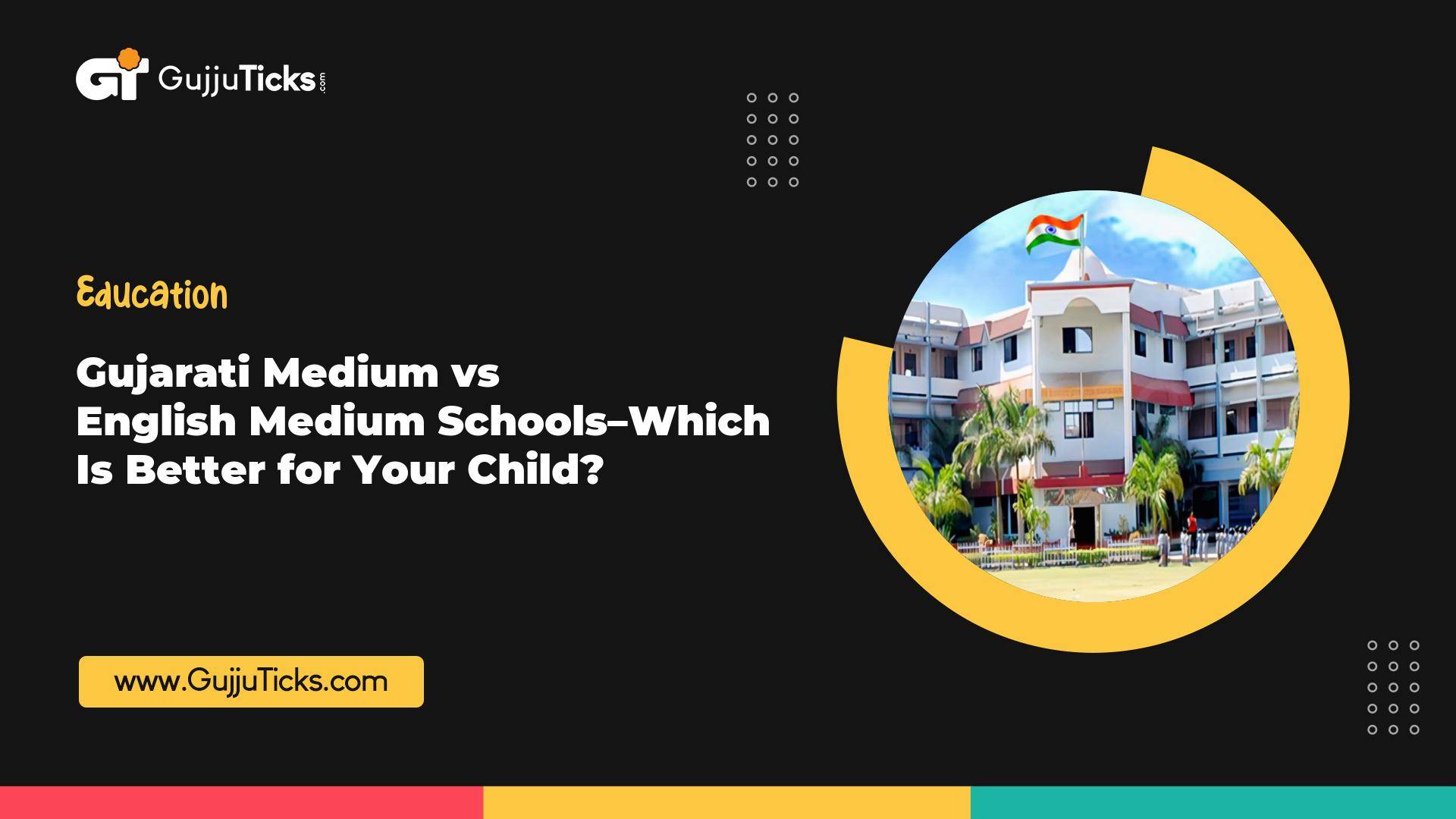
While some parents prefer the comfort and cultural alignment of the mother tongue, others are drawn to the perceived benefits of English as a global language. Selecting the best medium of instruction for your child is one of the most significant decisions a parent can make. The debate between Gujarati and English-medium schools has been going on for decades in Gujarat and throughout India.
In this blog, we'll examine the main distinctions between Gujarati and English-medium schools, balance their benefits and drawbacks, and assist you in making a decision that will best serve your child's future.
Understanding the Concept: What Is a Medium of Instruction?
The language that students are taught in schools is referred to as the medium of instruction. This is usually either Gujarati or English in Gujarat.
• Gujarati Medium Schools: Gujarati, which is frequently the child's first language, is used in these schools to teach all subjects (aside from English itself).
• English Medium Schools: Science, math, and even social studies are taught in English in these schools.
Your choice of medium affects not only how your child learns but also how they think, communicate, and ultimately interact with the outside world.
1. Language and Learning: The Cognitive Perspective
Several studies demonstrate that, particularly in the early years, children learn better in their mother tongue. Children learn concepts more quickly and are generally more comfortable expressing themselves.
Advantages of Gujarati Medium:
• Better early comprehension
• Familiarity with vocabulary at home
• Stronger cultural connection
However, because the majority of online resources, apps, and content for higher education are in English, English-medium schools have an advantage in digital learning and international communication.
Advantages of English Medium:
• Exposure to international content
• Better access to digital tools
• Early start in global language proficiency
Verdict: English has long-term benefits in higher education and the workplace, but Gujarati may be a better medium for early foundational understanding.
2. Career Opportunities and Competitive Exams
The fact that English-medium schools align with international tests like IELTS and GRE as well as competitive exams like NEET, JEE, and UPSC is one of the strongest justifications for them. The majority of these are held in English.
English Medium Benefits:
• Easier transition to English-based college curriculum
• Better preparation for national and international exams
• More job opportunities in private and multinational sectors
It's crucial to remember, though, that the Gujarat Board and even the CBSE now offer exams in Gujarati and other regional languages. However, the caliber of Gujarati study guides and tutoring is still improving.
3. Affordability and Accessibility
In general, Gujarati-medium schools—especially those that are municipal or government-aided—are more accessible and reasonably priced for the local population.
Pros of Gujarati Medium in Budget Terms:
• Lower school fees
• Lesser need for private tuitions
• Community-based learning environment
On the other hand, the majority of Gujarat's English-medium schools are private establishments with higher tuition and extra costs for supplies, attire, and extracurricular activities.
For low- and middle-income families, Gujarati medium is therefore a sensible choice, particularly in rural or semi-urban areas.
4. Cultural Identity and Values
Culture and language are closely related. Local holidays, customs, and values are frequently more naturally incorporated into the curriculum of Gujarati-medium schools. Youngsters grow closer to their heritage.
Gujarati Medium Schools Help With:
• Preserving cultural identity
• Communicating fluently with grandparents and the community
• Celebrating local literature and traditions
This level of cultural exposure may be lacking in English-medium schools, particularly those with international curricula. Nonetheless, a lot of people are now trying to incorporate Indian heritage into contemporary education.
5. Communication and Confidence
"Will my child be confident in interviews and public speaking if they study in Gujarati medium?" is a question that many parents worry about.
Language is not the only source of confidence. It is developed via encouragement and practice. English-medium students do, however, have more experience speaking the language, which is frequently necessary for corporate life, group discussions, and job interviews.
Nevertheless, a lot of accomplished professionals studied in Gujarati and subsequently became fluent in English. It's never too late to learn English if you have access to digital resources and language coaching.
6. Changing Trends in Gujarat’s Education
In Gujarat, the hybrid model of education is currently becoming more and more popular. Numerous educational institutions provide:
• Semi-English medium: Maths and Science in English, other subjects in Gujarati
• Bilingual teaching: Teachers explain in both languages to ensure clarity
Additionally, the New Education Policy (NEP 2020) supports teaching in the mother tongue until Grade 5, after which English is gradually introduced. This strikes a balance between future-readiness and concept clarity.
Real Parent Experiences: What They Say
Parents in Rajkot, Surat, and Ahmedabad frequently have differing views:
• “My child speaks perfect English, but can’t read a basic Gujarati newspaper.”
• “Our son studied in Gujarati medium till Class 8 and shifted to English later – now he’s in IIT.”
• “We chose English medium for global exposure, but we teach Gujarati stories at home.”
The lesson learned? There isn't a single, universal solution. The aptitude of your child, their surroundings, and your capacity to assist them at home all come into play.
Final Thoughts: Which Is Better for Your Child?
Particularly in the early years, a Gujarati-medium school might be the ideal choice if you value affordability, cultural values, and excellent early learning.
An English-medium school might provide a better fit if your goals are international exposure, global careers, or competitive exams.
Depending on your child's comfort level, hybrid options or gradual transitions can also be investigated. For example, start with Gujarati and switch to English around Class 6 or 8.
Tips for Parents: How to Decide
1. Assess Your Child’s Interest – Are they linguistically inclined by nature?
2. Check School Quality, Not Just Medium – Language is not as important as good instruction.
3. Speak Both Languages at Home – To gain a cognitive advantage, promote bilingualism.
4. Visit Schools Personally – Examine the curriculum and speak with the teachers.
5. Plan for the Long Term – Consider where your child may attend school or find employment.
Conclusion
Keep in mind that language is merely a tool, not the end goal, regardless of whether you decide to use Gujarati or English as your medium. The most important thing is how well the school fosters your child's moral principles, discipline, curiosity, and self-assurance.
You can make sure your child succeeds in any medium—and in life—by continuing to be involved in their education and making thoughtful decisions.